

The Great Learning is a prose that discusses the Confucian idea of self-cultivation, governance and peace in the world. It was originally the 42nd chapter of Xiao Dai Li Ji, and is said to be written by Zengzi. It is actually a Confucian work from the Qin and Han dynasties, and an important work in ancient China that discusses educational theory. After Cheng Hao and Cheng Yi of the Northern Song Dynasty, Zhu Xi of the Southern Song Dynasty wrote the Great Learning, which was eventually called the “Four Books” together with The Doctrine of the Mean, The Analects and Mencius. After the Song and Yuan Dynasties, the Great Learning became an official textbook for schools and a must-read for the imperial examinations, which had a great influence on ancient Chinese education.
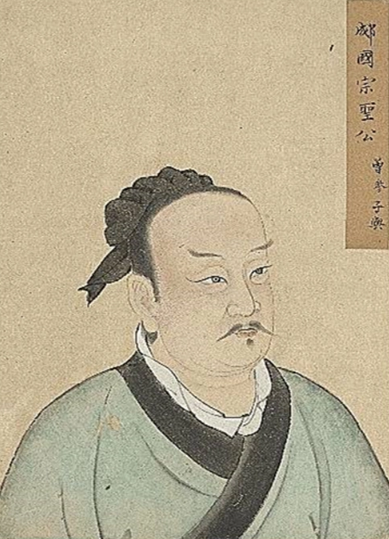
《大学》是一篇论述儒家修身治国平天下思想的散文,原是《小戴礼记》第四十二篇,相传为曾子所作,实为秦汉时儒家作品,是一部中国古代讨论教育理论的重要著作。经北宋程颢、程颐竭力尊崇,南宋朱熹又作《大学章句》,最终和《中庸》、《论语》、《孟子》并称“四书”。宋、元以后,《大学》成为学校官定的教科书和科举考试的必读书,对中国古代教育产生了极大的影响。
《大学·七》 曾子
所谓修身在正其心者:身有所忿懥,则不得其正;有所恐惧,则不得其正;有所好乐,则不得其正;有所忧患,则不得其正。心不在焉,视而不见,听而不闻,食而不知其味,此谓修身在正其心。
What is meant by, “The cultivation of the person depends on rectifying the mind,” may be thus illustrated: –If a man be under the influence of passion, he will be incorrect in his conduct. He will be the same, if he is under the influence of terror, or under the influence of fond regard, or under that of sorrow and distress. When the mind is not present, we look and do not see; we hear and do not understand; we eat and do not know the taste of what we eat. This is what is meant by saying that the cultivation of the person depends on the rectifying of the mind.
